
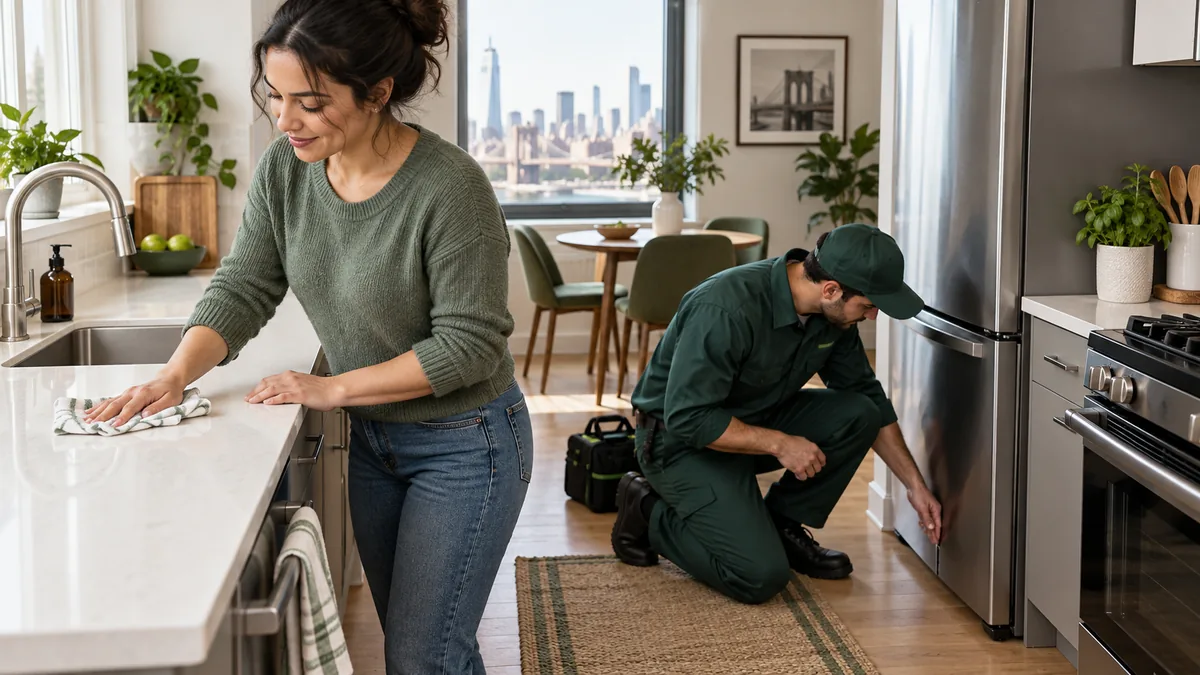
A clean kitchen can still have an unresolved problem
Repeated cockroach sightings do not automatically mean that someone is failing to clean. Food residue matters, but so do water, hiding places and openings. NYC Health’s integrated pest management approach addresses those conditions alongside pest control.
For a Manhattan apartment resident, the useful question is what remains unresolved in this room or the connected building. A treatment visit should leave a record of findings, not simply a date on a calendar. If activity returns, that record helps the next person decide what to investigate.
Guidance: NYC Health: integrated pest management
Describe the pattern of sightings
Keep a short record for the locations you already use each day. Note whether insects appear around the sink, an appliance, a cabinet hinge or another specific spot. Record the date and whether you saw one insect or several; photographs can help with identification.
Distinguish new observations from older staining or debris. Do not dismantle electrical appliances or reach into inaccessible spaces to gather evidence. A photo of the surrounding cabinet or fixture is often enough to show the inspector where to begin.
Check water and accessible food sources
NYC Health recommends addressing leaks, storing food securely and reducing clutter and garbage. Report a persistent drip even if it seems too small to matter. Ask who will repair it and whether the cabinet beneath it also needs attention.
Make a manageable routine: clear crumbs after meals, close food containers and keep the area around household waste clean. Choose actions you can sustain in a small apartment. An elaborate cleaning schedule is less useful if a maintenance defect remains unreported.
Guidance: NYC Health: practical pest prevention for residents
Ask how treatment and repairs fit together
Bring the previous service record to the next appointment. Explain when activity returned and what changed after the visit. Ask whether the identification, application locations, monitoring or repair plan needs review.
NYCHA describes moving away from routine spray reliance toward a more targeted pest-control approach. That is useful context for asking questions, but its resident preparation instructions apply to its own program; follow the instructions supplied for your building and treatment.
- Which locations will be monitored?
- What should remain undisturbed after treatment?
- Which leaks or openings need building maintenance?
- Who will arrange access if inspection of a shared area is necessary?
Guidance: NYCHA: approach to pest control
Avoid making follow-up harder to interpret
Tell the professional before adding a different pesticide or cleaning around treated areas. They need to know what has changed to evaluate the result and give appropriate instructions. NYC Health warns against insect foggers and unlabelled or illegal pesticide products.
Agree when to report continued activity and when the next assessment will happen. A simple update linking observations to locations and dates is more actionable than starting over with a new treatment every time an insect appears.
Guidance: NYC Health: integrated pest management