
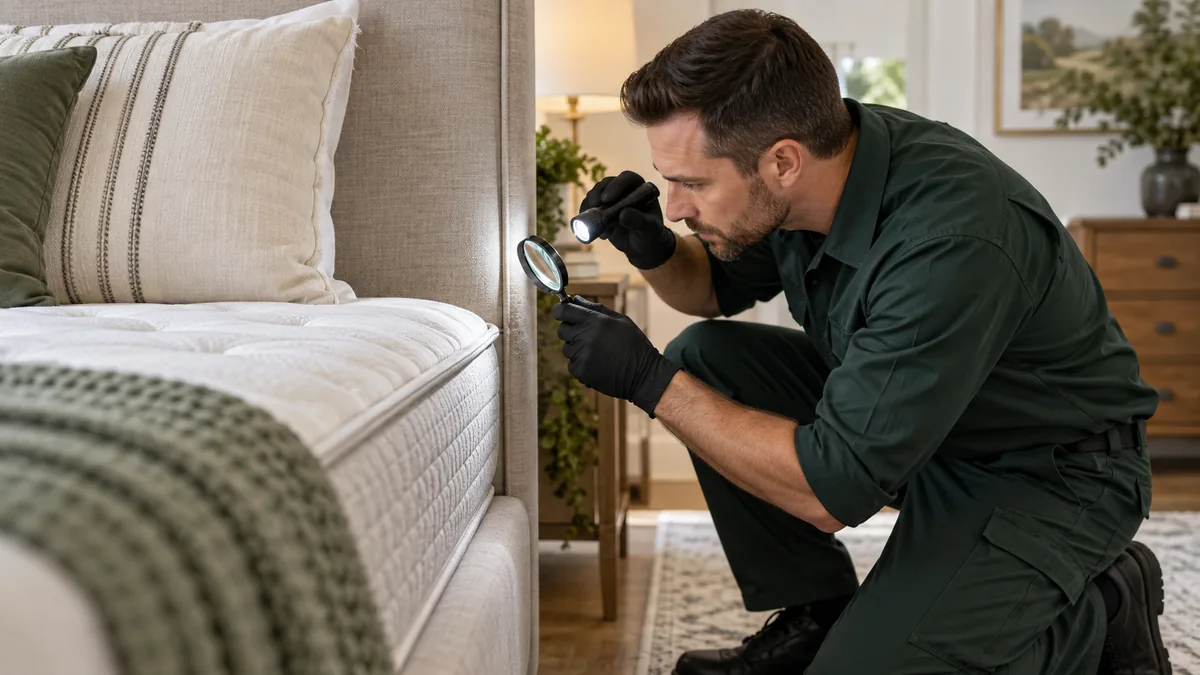
Look for evidence before naming the problem
Waking with marks on your skin can be worrying, but it does not establish that bed bugs are present. EPA guidance notes that bites are not a reliable way to identify an infestation. Start with an inspection of the sleeping area rather than buying treatment based only on symptoms.
Use a flashlight to look at accessible mattress seams, bed-frame joints and nearby furniture. Possible evidence includes live insects, shed skins and dark spotting. Photograph what you find in place, followed by a closer image with a familiar size reference nearby. Ask a qualified professional to interpret uncertain evidence.
Keep belongings from becoming a moving project
Resist the urge to carry the mattress through the hallway or move everything into another room. EPA advises against panicking and throwing out furniture; treatment may be possible, and moving items can spread the problem.
If you can safely contain a suspected insect, keep it sealed for identification. Record where it came from. Do not move an uncontained specimen through the building or hand loose bedding to another resident to inspect. Ask for instructions before taking suspected items to shared laundry facilities.
Tell the building team what you actually found
Send management the location, dates and evidence, and request an inspection. Mention whether furnishings belong to you or came with the apartment, since access and decisions about those items may involve someone else. NYC Health advises tenants to report bed bugs to the landlord and building owners to use a pest management professional.
In a Manhattan building with shared hallways and laundry rooms, coordination matters. Ask who will arrange any inspection beyond your unit and how preparation instructions will be communicated. You do not need to investigate neighbors’ apartments yourself.
Guidance: NYC Health: bed bugs in rental buildings
Get preparation instructions for your situation
Preparation depends on the method and the belongings involved. A blanket instruction to empty everything can create unnecessary work if it is not tied to the proposed treatment. Ask for written instructions and raise practical obstacles before the appointment.
- Which rooms and items need preparation?
- How should laundry be contained, transported and stored afterward?
- What should happen to items that cannot be heated or washed?
- What access is needed around beds and furniture?
- When is follow-up planned, and what signs should be reported?
Do not improvise treatment
Do not use outdoor pesticides indoors or attempt to heat a room with household heaters. Follow the professional’s plan and the applicable product instructions. If you have already used a product, give the inspector its name and the location of application.
A useful appointment ends with a documented identification, a clear scope and a way to assess progress. Keep the report alongside your original photographs so follow-up is based on evidence rather than repeated guesses about skin marks.