
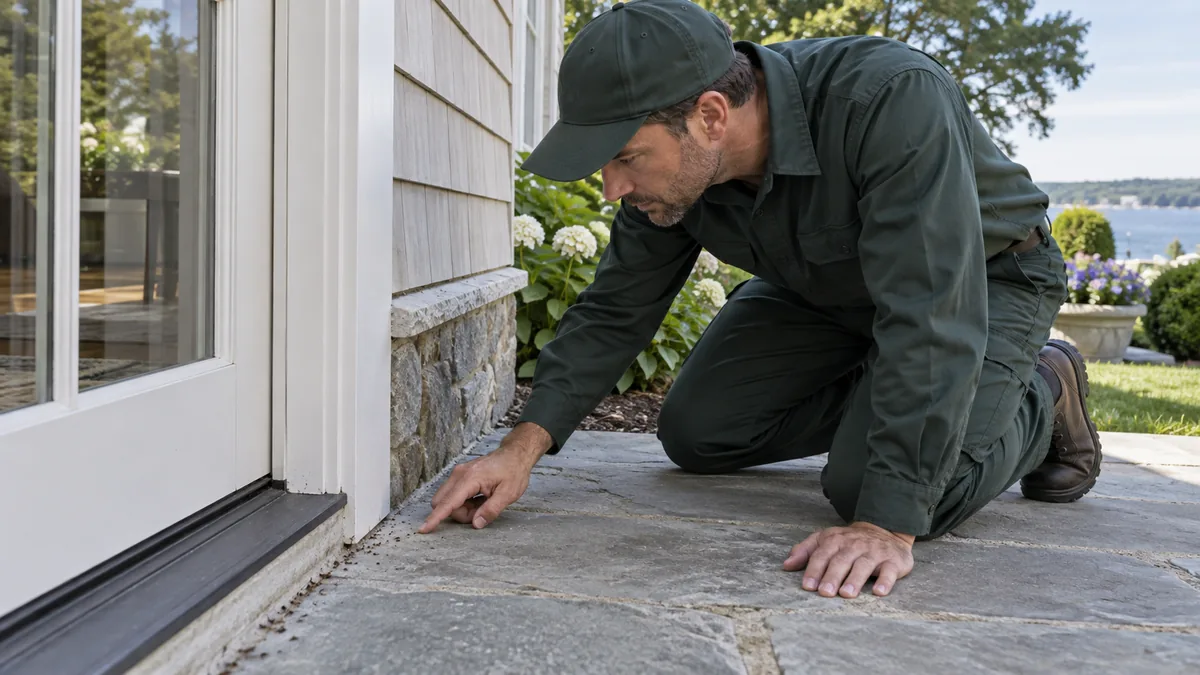
Signs to look for
Repeated trails, winged ants indoors, fine debris near wood or activity around food and moisture can point to a nearby colony. Species identification changes the response.
How treatment starts
The inspection follows trails to likely nests, entry points and conditions supporting the colony. Targeted baits or treatments are chosen for the species and location.
Timing and follow-up
Colony treatments can take time to work. The technician should tell you whether to leave active trails undisturbed and when to expect a follow-up.
Prevention
Seal food, clean spills, fix moisture problems and close exterior gaps after the active route and nest have been assessed.
What affects the price
Species, number and location of nests, building size, access and follow-up affect the quote.
Common questions
Why do ants keep returning?
Food, water, entry gaps or a colony that was never reached can keep the trail active.
Are carpenter ants termites?
No. Both can be associated with wood, but they behave differently and require correct identification.