
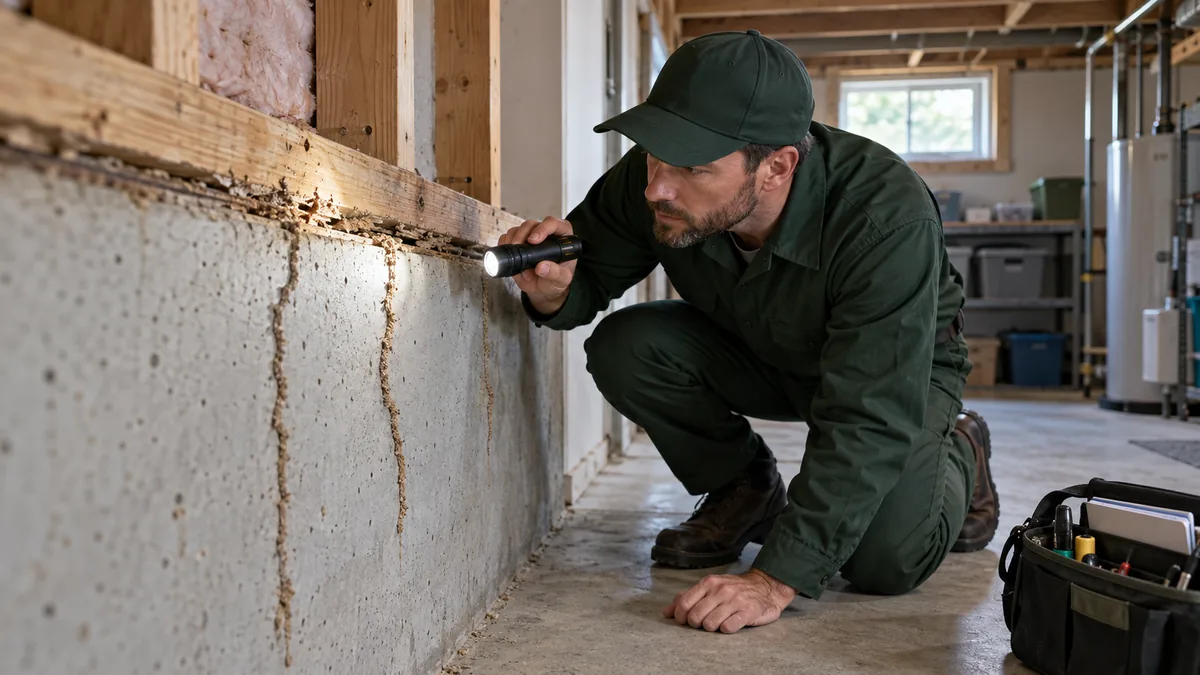
Signs to look for
Mud tubes, hollow-sounding wood, blistered paint and discarded wings can point to termite activity. Similar damage can have other causes, so an inspection should confirm the insect and the affected area.
How treatment starts
The technician checks accessible wood, moisture conditions, the foundation and likely entry points. The findings determine whether monitoring, a localized treatment, a soil treatment or another method fits the structure.
Timing and follow-up
Inspection time and treatment length depend on the size and construction of the property. The proposal should state when the work begins, which areas need access and how follow-up will be handled.
Prevention
Repair leaks, improve drainage and keep firewood, lumber and wood debris away from the building. Ask which moisture or soil-to-wood conditions matter at your property.
What affects the price
Property size, construction, access, treatment method, affected area and monitoring needs shape the quote.
Common questions
Do I need an inspection first?
Yes. The inspection helps distinguish active termites from old damage or another wood-destroying insect.
Will one treatment solve it?
That depends on the species, structure and method. The written plan should explain monitoring and any return visits.