Signs to look for
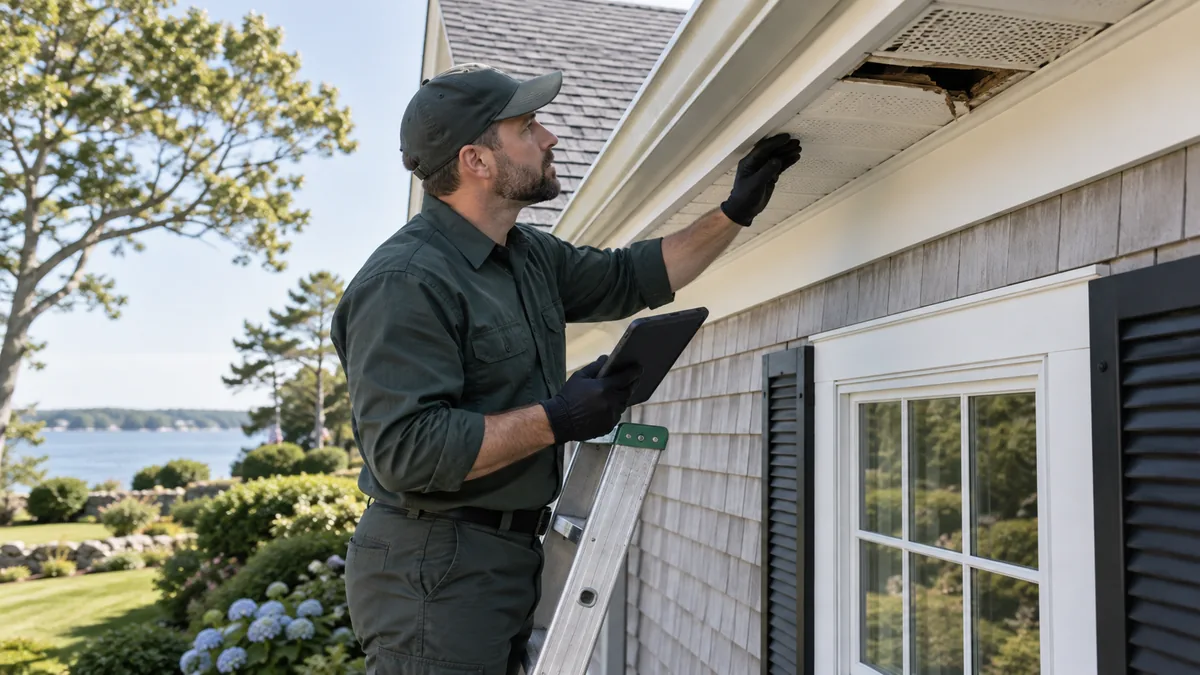
Heavy movement in an attic, damaged vents, nesting material, strong odors or repeated entry at the roofline may call for wildlife work rather than general rodent service.
How treatment starts
The inspection identifies the animal, entry routes, damage and the possibility of young. The legal plan may include one-way devices, removal, cleanup and repairs.
Timing and follow-up
Species, season, young animals, building height and local rules can affect when exclusion can be completed.
Prevention
Maintain vents, soffits, roof edges and chimney caps, secure trash and repair new damage after every animal has been accounted for.
What affects the price
Species, height, access, contamination, number of openings and repair work shape the quote.
Common questions
Is wildlife work the same as rodent control?
No. Larger wildlife can involve different equipment, laws and licensing.
Can the opening be sealed immediately?
The animal and any young must be accounted for before a route is permanently closed.