
Signs to look for
Fresh droppings, gnaw marks, greasy rub marks, shredded nesting material and scratching after dark are common signs. Note the rooms and times so the inspection can follow the pattern.
How treatment starts
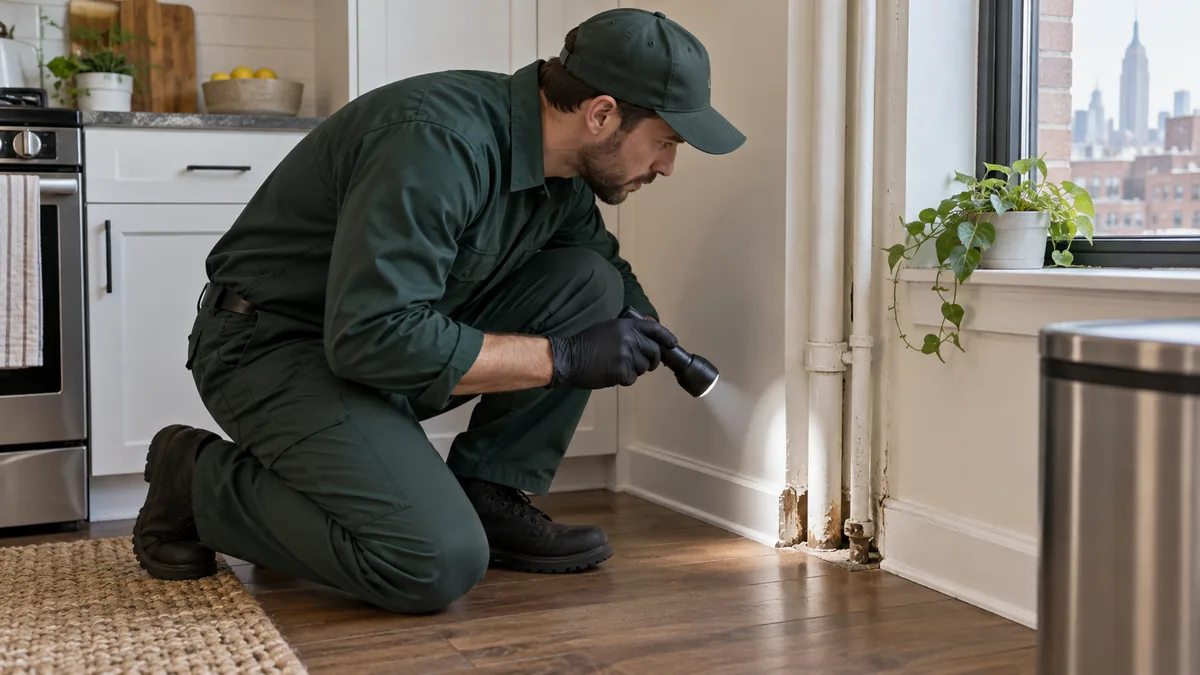
The technician looks for active routes, food and water sources, nesting areas and gaps around pipes, doors, foundations and rooflines. Control, monitoring and exclusion should work as one plan.
Timing and follow-up
Rodent work often needs more than one visit. Monitoring shows whether activity is falling and helps confirm when entry points can be closed safely.
Prevention
Store food and pet food in hard containers, use fitted trash lids, clean beneath appliances and repair building gaps with durable materials suited to the opening.
What affects the price
The species, extent of activity, number of units, access, cleanup and exclusion repairs affect the total.
Common questions
Is a single visit enough?
Often, no. Inspection, control, monitoring and repairs may happen across several visits.
Can every hole be sealed right away?
The technician should account for active animals before closing routes that could trap them inside.