
Signs to look for
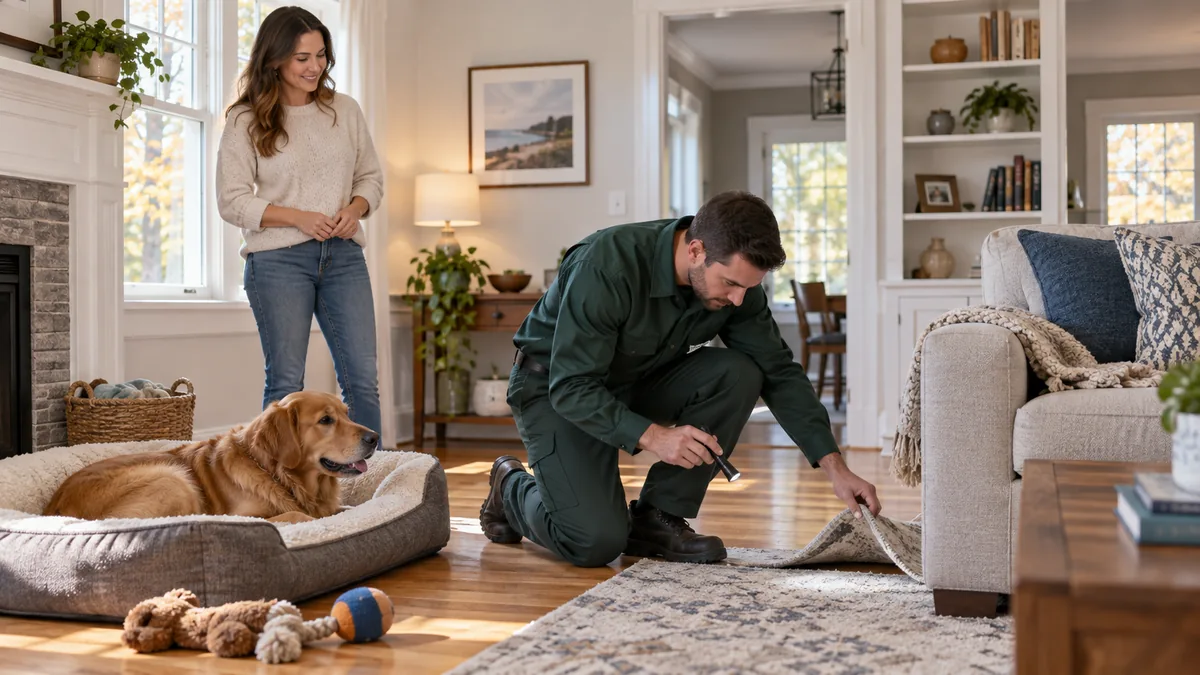
Jumping insects, bites around ankles and dark flea dirt in pet bedding can indicate activity. A veterinarian can check and treat pets appropriately.
How treatment starts
The plan covers affected rooms, pet resting areas and possible animal hosts. Vacuuming, laundry, veterinary care and treatment timing need to support one another.
Timing and follow-up
Protected eggs and pupae can keep producing adults after the first visit. Follow-up and regular vacuuming are often part of the schedule.
Prevention
Use veterinarian-approved prevention, wash pet bedding, vacuum edges and address rodents or wildlife that may carry fleas onto the property.
What affects the price
Property size, number of affected rooms, severity and follow-up requirements influence cost.
Common questions
Why am I seeing fleas after treatment?
Adults may continue to emerge from protected life stages. Follow the written vacuuming and monitoring plan.
Will treating the home be enough?
Pets and possible animal hosts need appropriate attention as part of the wider plan.