
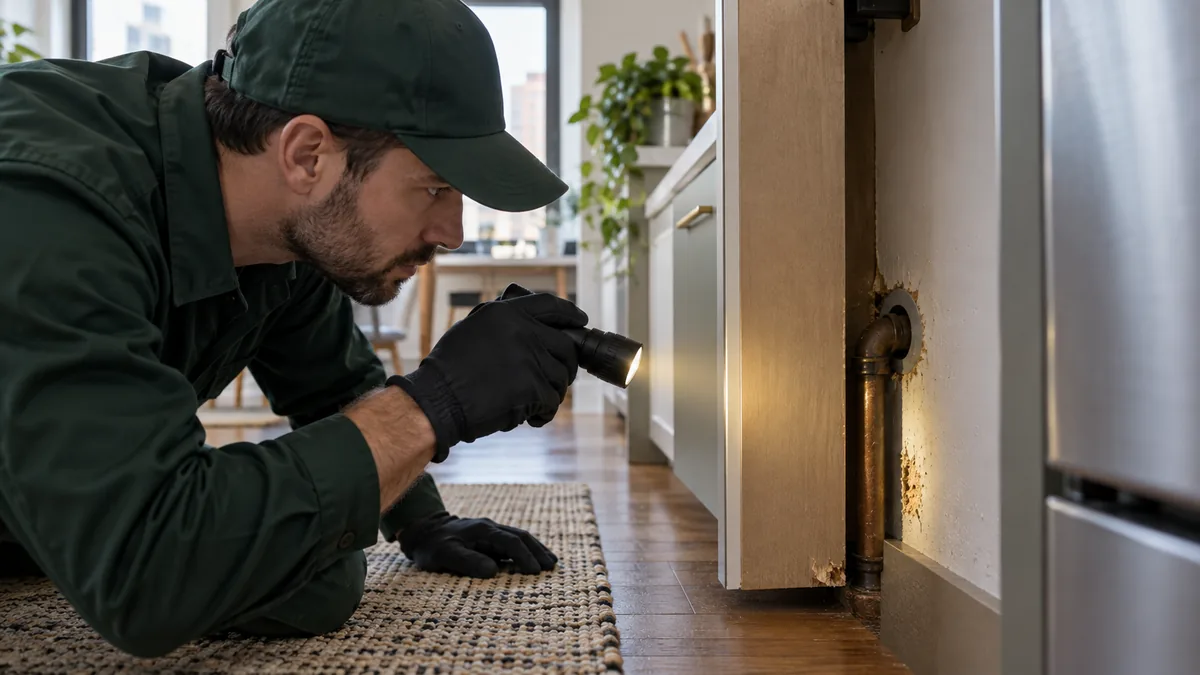
Start with the room where you found evidence
A mouse crossing the kitchen floor deserves attention, but one sighting does not tell you the extent of the problem. Note the time and its route if you can do so without chasing it. Photograph suspected droppings from a safe distance and keep children and pets away from the affected spot.
Do not assume that a particular Manhattan neighborhood or an apartment’s floor tells you where the mouse came from. An inspection should investigate the evidence in your home and any relevant building connections. Give the inspector observations, not a theory they must work backward from.
Handle cleanup carefully
CDC advises against vacuuming or sweeping rodent urine, droppings or contaminated surfaces before they have been disinfected. Follow its cleanup guidance and the disinfectant product label. If contamination is extensive, difficult to reach or involves building equipment, ask for professional guidance.
Take any useful photographs before cleanup, but do not leave contaminated material exposed just to preserve evidence. Tell the technician what was cleaned and when. That provides context if the area looks different by the appointment.
Guidance: CDC: how to clean up after rodents
Reduce access to food and report defects
Keep food in secure containers, clear food debris and close household garbage lids. NYC Health’s resident guidance combines these everyday measures with repair of leaks and openings. Cleaning is useful, but it does not substitute for assessing how a mouse entered.
Look at visible gaps under sinks and along baseboards without dismantling fixtures. Do not remove pipe coverings, move a heavy appliance or attempt work on a radiator. Send photos of suspected openings to the super and ask who will assess a durable repair.
Give the inspection a clear brief
Tell the company which rooms have evidence, when it first appeared and what has already been done. Include previous trapping or pesticide use, repairs and recent access difficulties. If several residents have reported activity, ask management to coordinate information rather than passing along rumors.
- Which signs support the identification?
- Which openings need repair, and who is authorized to repair them?
- Does the inspection need access to a cellar, service room or adjacent space?
- How will monitoring be checked, and what should I report between visits?
Check progress using the same locations
Keep a short dated record after the visit. “No new signs in the cleaned sink cabinet, but one sighting near the front door” gives the next inspection a concrete starting point. Ask what evidence would justify changing the plan.
Avoid promising yourself a deadline based on one quiet evening. Agree a follow-up process with the technician and building team, and confirm which repairs are still outstanding. The objective is to address the activity and its route, not simply remove the last mouse you saw.