
Separate a street sighting from a building concern
Seeing a rat on a Manhattan block does not prove that rats are inside every nearby building. It does justify paying attention when activity repeatedly occurs at your entrance, basement access or waste-storage area. Record the location and time from a safe distance.
Describe whether you saw an animal, damaged waste bags, a hole or another possible sign. Do not call every opening a rat burrow without assessment. A specific report gives the super or inspector something to check and avoids turning a single sighting into an unsupported story about the neighborhood.
Look at how waste is stored
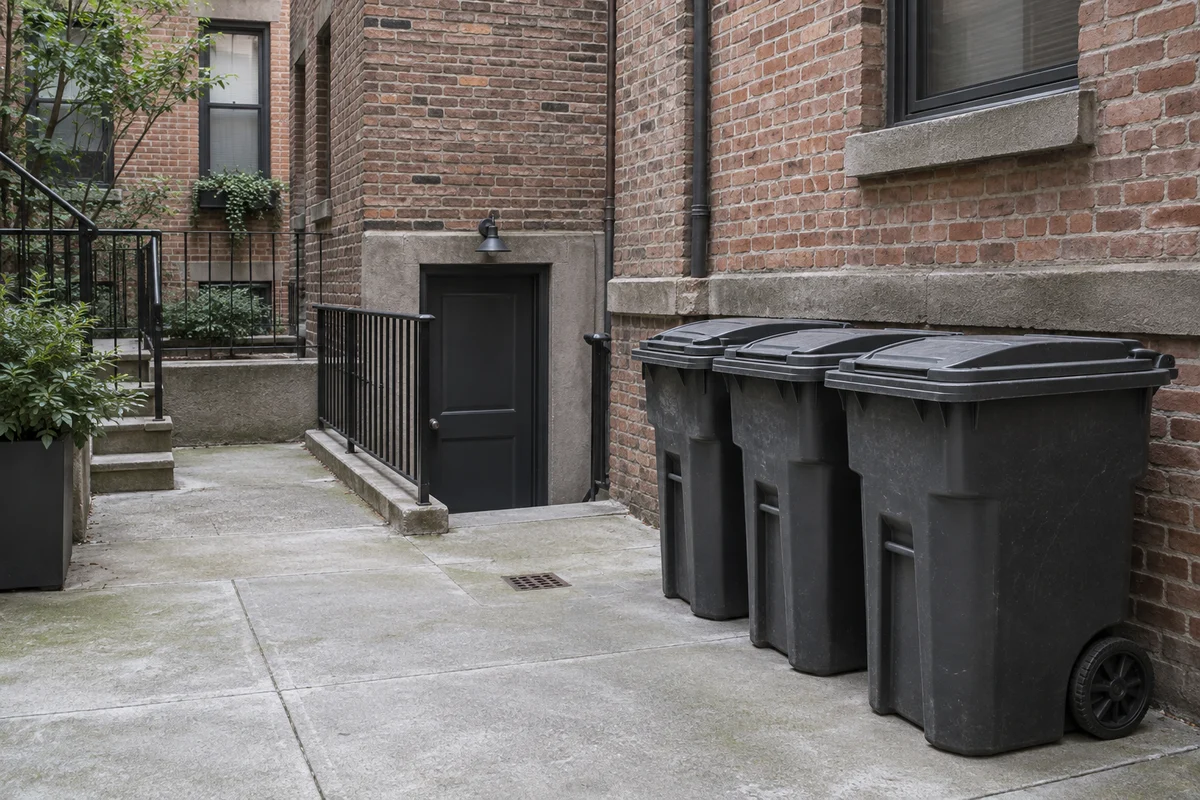
NYC Health recommends secure waste containers and following the building’s disposal arrangements. Tell management if a lid cannot close, a container is damaged or rubbish is repeatedly left beside the bins. A photograph showing the condition and its location is more useful than a close-up with no context.
DSNY’s containerization requirements depend on the property and the current rollout. Check its live guidance for your building rather than relying on an old sign or assuming a neighboring property follows the same rules. Ask management where residents should place waste and how overflow is handled.
Guidance: NYC Health: rats and property management · DSNY: current containerization guidance
Give the building team a practical report
Include the building address, exact side or entrance, time of observation and any recurring waste problem. If the area is locked, tell management that access will need to be arranged for an inspection. Do not enter service rooms or neighboring property to investigate.
- Location: beside the rear bins, near the cellar door or another identifiable point.
- Observation: a rat sighting, damaged lid, scattered food waste or possible opening.
- Timing: a single event or a repeated pattern on specified dates.
- Access: who can open gates or arrange inspection of common areas.
Keep residents’ tasks separate from specialist work
Residents can use the designated bins correctly and report defects. Building staff and pest professionals should assess suspected entry routes, recurring activity and the appropriate control plan. Do not place loose poison or interfere with bait stations.
If activity involves a street tree bed, use NYC Health’s tree-bed guidance and the appropriate reporting route. Do not fill it with concrete or cover it with paving to solve a suspected rat problem; NYC Health says such alterations require NYC Parks approval.
Follow the conditions, not only the sightings
After the first response, check whether the reported lid, spill or access defect has actually been addressed. Keep new observations tied to the same locations. Ask who will revisit the site if the problem continues and whether the inspection included the route from waste storage toward the building.
For a private inspection, clarify the boundary of the job: an apartment visit does not automatically include a courtyard, commercial waste area or neighboring property. Agree access and authorization before booking so the inspection can cover the places that prompted the concern.